Big Bear Valley Historical Museum: A Visitor’s Guide
Most people come to Big Bear for the lake and the mountains, but tucked away in Big Bear City is a quieter kind of attraction that tells you how this whole place came to be. The Big Bear Valley Historical Museum is an open-air pioneer village, more than a dozen original log cabins, barns, and frontier buildings gathered from around the valley and filled with the tools, furniture, and photographs of the people who settled here. It is a hands-on, walk-through history lesson, it is welcoming to families, and it is one of the best-value stops in town. Here is everything you need to plan a visit.
The Big Bear Valley Historical Museum is a free-to-low-cost, open-air museum in Big Bear City that preserves the valley’s pioneer and gold-mining history across more than a dozen relocated historic cabins and buildings. Run by the nonprofit Big Bear Valley Historical Society, it is open seasonally, roughly Memorial Day weekend through Labor Day, on Wednesdays, Saturdays, and Sundays from 10 a.m. to 4 p.m. Expect period artifacts, Native American Serrano history, and live summer demonstrations like blacksmithing and gold panning, plus special events through the season. Plan about one to two hours, and confirm current hours and events on the museum’s site.

A pioneer village that tells Big Bear’s story
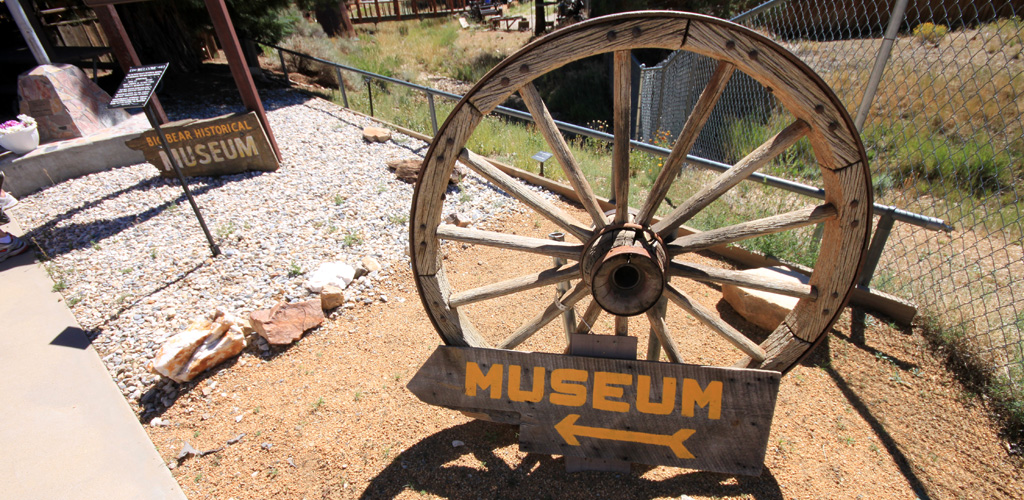
The Big Bear Valley Historical Museum is not a single building with glass cases. It is an outdoor collection of real historic structures, log cabins, barns, a schoolhouse, a blacksmith shop, and a general store, that were saved from around the valley and relocated to one shared site so visitors can walk among them. Founded by local historian Eleanor Abbott and cared for by the volunteer-run Big Bear Valley Historical Society, the museum exists to preserve the story of the families who built this community, from the gold-rush era through the ranching and resort years.
That open-air format is what makes it special. Instead of reading about pioneer life, you step inside the cabins where people actually lived, see the tools they worked with, and get a real sense of how hard and how resourceful mountain life was more than a century ago. It is a small, authentic, lovingly maintained place, the kind of local gem that rewards the travelers who seek it out.
What you will see
The grounds hold more than a dozen preserved buildings and thousands of artifacts spanning the 1800s to the early 1900s. Highlights include:
- Historic cabins and barns relocated from across the valley, furnished with period pieces so each one feels lived-in.
- A one-room schoolhouse, blacksmith shop, and general store that recreate the everyday institutions of a frontier mountain town.
- Gold-mining equipment and displays from the era that first put Big Bear on the map.
- Native American Serrano artifacts honoring the valley’s original inhabitants.
- Early photographs and household items that trace Big Bear’s path from mining camp to lakeside resort.
Because the collection is arranged as a village, you can wander at your own pace, and there is almost always a docent or volunteer happy to share the story behind a particular cabin or artifact.
Live demonstrations and special events
Part of what sets the museum apart is that it comes to life in summer. On many open days, volunteers run live demonstrations such as blacksmithing and gold panning, which are a hit with kids and a vivid way to understand the skills that pioneer life demanded.
The museum also hosts a lineup of special events through the season. Recent seasons have included an Old Miners Days celebration in August with prospecting demonstrations and games, a plein-air art day where artists paint the historic grounds, a family friendly Dog Dayz gathering, patriotic summer celebrations, and a nighttime lantern festival to help close out the season. The specific events and their dates change each year, so check the museum’s events page for the current calendar and try to time your visit around one if you can.

Planning your visit
The museum sits in Big Bear City near Greenway Drive, on the east side of the valley and a short drive from The Village and the lake. It is seasonal and open only a few days a week, so a little planning goes a long way. Here are the essentials at a glance.
| Location | Big Bear City, near Greenway Drive (east end of the valley) |
| Season | Roughly Memorial Day weekend through Labor Day, plus select fall event dates |
| Days & hours | Wednesdays, Saturdays, and Sundays, 10 a.m. to 4 p.m. |
| Admission | Low-cost and donation-supported; children free |
| Time needed | About 1 to 2 hours |
| Run by | The nonprofit Big Bear Valley Historical Society |
Hours, admission, and the event calendar change with the season and are set by the museum. Confirm the latest details on the Big Bear Valley Historical Society site before you go.
A few practical tips: the grounds are outdoors, so wear comfortable shoes and bring sun protection and water, since Big Bear sits near 6,750 feet and the sun is strong. Bring a little cash for the donation box and gift area, and if you are traveling with a dog, check the current event and pet policies first.
A quick history of Big Bear Valley
The museum’s collection makes a lot more sense with a little context. Big Bear’s modern history really began in 1860, when gold was discovered in nearby Holcomb Valley and touched off the largest gold rush in Southern California history, drawing miners and the rough-and-tumble boomtown of Belleville almost overnight. When the gold thinned out, ranchers and homesteaders stayed on, and in the 1880s a dam across Bear Creek created Big Bear Lake, at the time one of the largest man-made lakes in the world, built to supply water to the citrus groves down in Redlands.
The lake, in turn, transformed the valley into a resort, first a rustic fishing and hunting getaway, then the year-round mountain destination it is today. The museum captures every chapter of that arc. If the history grabs you, dig deeper with our overview of Big Bear Lake history and this history of Big Bear, and see where else the past comes alive in our roundup of the top places for history lovers.
Great for families and history lovers
The museum lands in a sweet spot for a lot of travelers. For families, it is an affordable, screen-free outing where kids can roam between cabins and watch a blacksmith at work, with free admission for children making it an easy yes. For history buffs, the depth of the collection and the volunteers’ knowledge make it far richer than its modest size suggests. And for anyone looking for a lower-key day, it is a peaceful, uncrowded change of pace from the lake and the slopes. It pairs naturally with other educational stops like the Big Bear Discovery Center, and you can build a full itinerary from our guide to things to do in Big Bear.
Frequently asked questions
Where is the Big Bear Valley Historical Museum?
The museum is in Big Bear City, near Greenway Drive on the east end of the valley, a short drive from The Village and the lake. It is an open-air museum, so plan to walk the grounds among the historic cabins and buildings rather than tour a single indoor hall. Check the museum’s official site for the exact address and directions before you head over.
What are the museum’s hours, and is it open year-round?
No, it is seasonal. The museum is generally open from around Memorial Day weekend through Labor Day, on Wednesdays, Saturdays, and Sundays from 10 a.m. to 4 p.m., with a few special event dates that can extend into the fall. Hours shift with the weather and the season, so confirm the current schedule on the museum’s site before you visit, especially early or late in the season.
How much does it cost to visit?
Admission is low-cost and donation-supported, and children get in free. The museum is run by the nonprofit Big Bear Valley Historical Society, so your donation goes directly toward preserving the cabins, artifacts, and educational programs. Bring a little cash for the donation box and the gift area if you would like to support the work they do.
What will I see at the museum?
You will walk through more than a dozen original log cabins, barns, and pioneer buildings that were moved here from around the valley, including a schoolhouse, a blacksmith shop, and a general store, all furnished with artifacts from the 1800s and early 1900s. There are also mining displays, Native American Serrano artifacts, and early photographs that trace Big Bear’s story from gold camps to mountain resort.
Are there special events and demonstrations?
Yes. Across the summer season the museum hosts live demonstrations like blacksmithing and gold panning, plus special events such as an Old Miners Days celebration in August, a plein-air art day, a family Dog Dayz gathering, and a lantern festival to help close the season. The exact events and dates change from year to year, so check the museum’s events page for the current schedule when you plan your trip.
Is it good for kids?
Very. The open-air layout lets kids roam between the cabins, the live demonstrations are hands-on and memorable, and admission is free for children. It is an easy, screen-free hour or two that sneaks in some real local history, and it pairs well with other family-friendly Big Bear stops. Older kids curious about the gold rush and pioneer life tend to get the most out of it.
How long should I plan to spend there?
Most visitors spend about one to two hours walking the grounds and stepping inside the buildings, a little longer if a demonstration or special event is going on. It makes an easy addition to a Big Bear City day, and because the museum is only open a few days a week in season, it is worth planning your visit around a Wednesday, Saturday, or Sunday.
Stay in Big Bear and explore its history
Book a cabin close to Big Bear City and the lake, and make the museum one stop on an easy, memorable mountain getaway.
Search Big Bear cabins