Big Bear Short-Term Rental Permit Rules Explained: City of Big Bear Lake vs. San Bernardino County (October 2026)
The short answer: Every cabin in the valley needs a Big Bear short-term rental permit, but which one depends on which side of the city line you sit. Cabins inside the City of Big Bear Lake need a City vacation rental license. Cabins in Big Bear City, Sugarloaf, Fawnskin, Erwin Lake, Baldwin Lake, and Lake Williams need a San Bernardino County short-term rental permit. Three rules differ most. The occupancy cap is 16 in the City and a hard 12 in the County. Lodging tax is 10% plus a 3% tourism assessment in the City and 7% in the County. The County also limits permits to one per parcel under two acres. Neither permit transfers when a cabin sells. Big Bear Vacations keeps every managed cabin permitted, posted, and compliant as part of the program.
On This Page
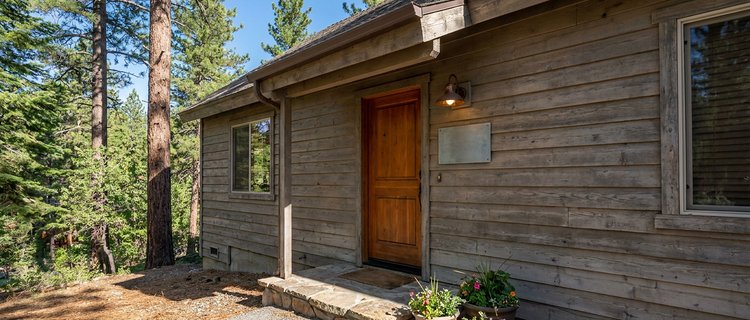
A licensed cabin posts an exterior sign with its 24/7 local contact and occupancy limits.
The most common permit question we hear from owners is not “what are the rules?” It is “which rules?” Big Bear is one valley with two governments. The City of Big Bear Lake runs its own vacation rental program. San Bernardino County runs a separate one for the unincorporated communities around it. This guide lays both out as verified in October 2026. We have managed cabins under both since 1995.
How to Tell Which Jurisdiction Your Cabin Is In
The City of Big Bear Lake is the valley’s only municipality. It runs along the south shore and includes the Village, the marinas, both ski resorts, and the neighborhoods around them. Division Drive is the practical line on the east side. East of it, you are in unincorporated Big Bear City. The East Valley communities and the whole North Shore are County. A Big Bear Lake mailing address does not settle the question, because the post office serves both sides.
| Jurisdiction | Neighborhoods | Permit type |
|---|---|---|
| City of Big Bear Lake | The Village, Boulder Bay and the West End, Fox Farm, Castle Glen, Eagle Point, Moonridge including the Bear Mountain base | City vacation rental license |
| San Bernardino County (unincorporated) | Big Bear City east of Division Drive, Sugarloaf, Erwin Lake, Baldwin Lake, Lake Williams, Fawnskin and the North Shore | County short-term rental permit |
To confirm a parcel, use the San Bernardino County Assessor property lookup or call the City’s vacation rental program at (909) 866-5831. The neighborhood table above is the quick reference. The parcel lookup is the final word.
City of Big Bear Lake: Big Bear Short-Term Rental Permit Rules Inside City Limits
Inside the City, the permit is called a vacation rental license. It is issued annually to the owner and takes up to four weeks to process after a complete application. Its number must appear on every advertisement, and the license is posted inside the home.
Occupancy and parking
Occupancy is two adults per bedroom plus two additional adults. Children under 18 do not count toward the adult allowance. The total including children cannot exceed one person per 200 square feet of living space or 16 persons, whichever is less. Parking is one paved off-street space per bedroom, and guests park only on the property.
Noise, trash, fire, and response
Quiet hours run 10 p.m. to 7 a.m., with no outdoor spa use in that window and no amplified sound audible at the property line. Trash goes to a Clean Bear site or curbside service, and nothing is stored at a vacant rental. Open fire pit permits are not available at rentals; gas, charcoal, and pellet barbecues are allowed. Every licensed cabin needs a 24/7 complaint response agent who can be on site within 30 minutes of a City request. A small exterior sign lists the hotline, agent phone, maximum occupants, and maximum vehicles. The City collects 10% transient occupancy tax plus a 3% tourism assessment, reported monthly, as detailed in the City’s vacation rental program FAQ.
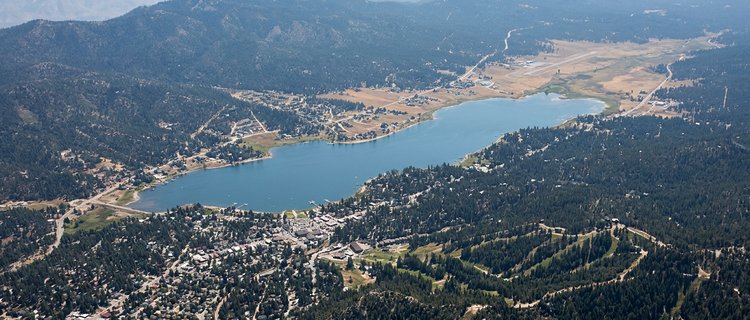
One valley, two permit programs. The City covers the south shore; the County covers Big Bear City, the East Valley, and the North Shore.
San Bernardino County: Big Bear Short-Term Rental Permit Rules in the Unincorporated Areas
In the unincorporated communities, the permit comes from the County under Development Code Chapter 84.28. It renews annually with an inspection, and unchanged renewals qualify for a lower fee. Fees posted at adoption were $600 to apply, $285 for the permit, and $600 to renew, plus a $250 neighbor notification fee. Confirm current amounts on the County short-term rental program site.
Occupancy, parking, and the parcel rule
Occupancy is two per bedroom plus two, with a hard cap of 12 overnight occupants regardless of bedroom count. A one-bedroom sleeps 4, a three-bedroom sleeps 8, and a five-bedroom or six-bedroom sleeps 12. Every occupant and guest vehicle must park on the property, and tight parking can lower the number further. An owner may hold no more than two permits. A parcel under two acres gets one permit; a parcel of two acres or more gets up to two.
Noise, trash, fire, and response
The responsible party must answer the phone within 30 minutes, be physically present within one hour, and keep a complaint log. Quiet hours are 10 p.m. to 7 a.m., with limits of 45 decibels in quiet hours and 55 otherwise, and no outdoor speakers. Animal-proof trash containers are required in the Mountain Region. Solid-fuel fire pits, chimineas, and wood-burning outdoor fireplaces are prohibited at short-term rentals. The County collects 7% transient occupancy tax and has no tourism assessment.
City vs. County, Side by Side
| Rule | City of Big Bear Lake | San Bernardino County |
|---|---|---|
| Permit and term | Vacation rental license, annual; up to four weeks to process | Short-term rental permit, annual; renewal inspection |
| Occupancy | 2 adults per bedroom + 2; capped at 1 per 200 sq ft or 16 | 2 per bedroom + 2; hard cap of 12 |
| Parking | 1 paved off-street space per bedroom | All vehicles on the property |
| Quiet hours and noise | 10 p.m. to 7 a.m.; no spa use; no amplified sound at the property line | 10 p.m. to 7 a.m.; 45 dB / 55 dB; no outdoor speakers |
| Trash | Clean Bear site or curbside; out no more than 24 hours before pickup | Animal-proof containers; out no more than 12 hours before pickup |
| Outdoor fire | No open fire pit permits; gas, charcoal, and pellet grills allowed | Solid-fuel fire pits and outdoor fireplaces prohibited |
| Responsible party | On site within 30 minutes of a City request | Phone within 30 minutes; on site within one hour |
| Permit limits | Two licenses per owner | Two permits per owner; one per parcel under two acres |
| Transfer at sale | License expires; new owner applies after escrow | Permit voided; new owner applies within 30 days |
| Lodging tax | 10% TOT + 3% BBLTBID | 7% TOT |
| Penalties | Unlicensed $1,500 / $2,500 / $5,000; operational $500 / $1,000 / $1,500 | Notice, then $1,000 / $2,000 / $5,000 |
What Does Not Transfer When a Cabin Sells
The Big Bear short-term rental permit does not. In the City, the license automatically expires on a sale or change of ownership. The new owner applies after escrow closes and should plan on up to four weeks of processing. A buyer who closes in early December can miss Christmas week if the application was not ready on day one. In the County, the sale voids the permit and the new owner has 30 days to apply. The cabin may keep operating while that application is pending. That requires a prior permit, no outstanding violations, and an application filed inside the 30-day window.
The lesson for buyers: ask for the seller’s permit history before you write the offer. Then count the gap between closing and your first bookable night. If you are buying, ask the Big Bear Vacations team for a free rental projection on the listing before you write the offer; the permit check is the first thing the team looks at. The permit ceiling also shapes earning power, because it caps the group size a large lodge can market to.
Penalties, and How a Manager Prevents Them
Both programs escalate quickly. The City fines unlicensed renting at $1,500, $2,500, and $5,000 within 12 months. Operational violations run $500, $1,000, and $1,500. The County issues a notice of violation, then $1,000, $2,000, and $5,000 citations. Two citations of the same type bring a suspension, and a repeat within 12 months can bring revocation. Operating while suspended carries up to $1,000 per day.
Almost every citation traces back to four things: over-occupancy, noise, parking, and trash. Routine prevents them. Posted house rules and occupancy limits set expectations before arrival. Guest vetting screens out the party booking. A 24/7 guest response team and Big Bear-based staff handle the complaint in person, inside the response window. Trash leaves after every turnover, so nothing sits out for a bear to find. None of that requires you to be on the mountain.
What Big Bear Vacations Handles for Owners
Compliance is part of the program, not a service you add. The team walks every new owner through the permit requirements for their jurisdiction and keeps every managed cabin compliant. That covers the postings inside and outside the home, the occupancy and vehicle limits in the listing and rental agreement, guest screening at booking, trash and parking protocols at turnover, and a local 24/7 response when the City or County calls. Lodging tax is collected and reported as part of the booking process, visible line by line on your monthly statement. The permit workstream is also part of our rent-ready checklist for new Big Bear cabins, so it is handled before the first guest.
Two governments, one valley, one set of rules for your cabin. Once you know which column is yours, the rest is a checklist. We have run that checklist under both jurisdictions since 1995. The homeowner FAQ covers how the program fits your cabin. The property care program shows what local operations look like. Or call our local team at (909) 866-8200 and ask which side of the line your cabin is on. We can usually tell you from the street name.
Frequently Asked Questions
FAQ
Is Big Bear City in the City of Big Bear Lake?
No. Despite the name, Big Bear City is an unincorporated community east of Division Drive, governed by San Bernardino County. A cabin there needs a County short-term rental permit, not a City license. The same is true of Sugarloaf, Erwin Lake, Baldwin Lake, Lake Williams, and Fawnskin.
FAQ
Can I rent while my permit is pending?
It depends on the jurisdiction. In the City of Big Bear Lake, you may not rent or advertise without a valid license. Unlicensed operation starts at a $1,500 fine. In the County, a new owner may keep operating while the application is pending. That requires a prior permit, no outstanding violations, and an application filed within 30 days of taking title.
FAQ
How many people can stay in my cabin?
Two per bedroom plus two, with a different ceiling on each side of the line. The City caps total occupancy at one person per 200 square feet or 16, whichever is less. Only adults count toward its per-bedroom formula. The County caps overnight occupancy at a hard 12 regardless of bedrooms, and on-site parking can lower that number.
FAQ
Does my permit transfer when I sell?
No, in either jurisdiction. A City license automatically expires on sale. The buyer applies after escrow closes, with processing of up to four weeks. A County permit is voided by the change in ownership, and the buyer applies within 30 days. Buyers should build the application into their closing timeline.
FAQ
Who pays TOT?
The guest pays it as part of the stay, and the operator collects and remits it. In the City, that is 10% transient occupancy tax plus a 3% tourism business improvement district assessment, reported monthly. In the County, it is 7% transient occupancy tax.
FAQ
What happens if a guest violates the noise rule?
The responsible party has to respond inside the window. That is 30 minutes on site in the City, and 30 minutes by phone plus one hour on site in the County. A violation can draw a $500 fine in the City or a notice and then a $1,000 citation in the County. In the Big Bear Vacations program, the 24/7 guest response team takes that call, documents it, and enforces the house rules.
Want a Cabin That Is Already Compliant on Day One?
Get your free rental projection from the local Big Bear Vacations team. We will tell you which jurisdiction your cabin is in and what the permit ceiling means for your number.
Get Your Free Rental Projectionor call our local team at (909) 866-8200