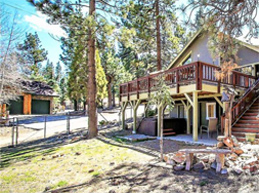
Does Cabin Size in Big Bear Matter? What a 1-Bedroom Condo and a 6-Bedroom Lodge Each Earn
The short answer: Yes, cabin size in Big Bear matters, but not the way most owners assume. Bigger cabins earn more gross revenue because groups pay more per night. Smaller cabins often earn more per bedroom and turn over cheaper. Net revenue, after cleaning time and wear, can rank the two closer than the headline suggests. Couples and ski weekenders book studios and one-bedrooms. Families book two to four bedrooms. Multi-family groups, reunions, and retreats book five-bedroom-plus lodges. That is where the published 2024 snapshots sit: $90,000 for a 6-bedroom that sleeps 16 and $70,000 for a 5-bedroom that sleeps 16. Every size earns when it is positioned for the right guest. The occupancy cap decides how many of those guests you can legally host.
On This Page
- Who books what in Big Bear
- Occupancy caps change the math
- Three ways to read revenue: gross, per bedroom, net
- Size-tier comparison table
- The small-cabin playbook
- The large-lodge playbook
- Worked example: a 2-bedroom and a 5-bedroom, read three ways
- Size is a strategy, not a verdict
- Frequently asked questions
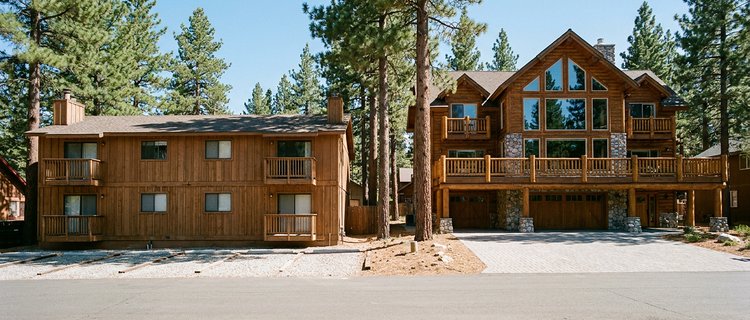
A condo and a lodge book different guests, different seasons, and different stay lengths. Both can earn.
Owners at both ends of the size range ask us a version of the same question. The condo owner asks whether a one-bedroom is worth managing. The lodge owner asks whether sixteen guests are worth the wear. We have managed Big Bear cabins since 1995, from one-bedroom condos to lodges that sleep 16. The honest answer is that size changes the playbook, not the verdict. This post shows who books each size and how the City and County occupancy caps bound the upside. It also shows why reading revenue three ways changes the ranking.
Who Books Each Cabin Size in Big Bear
Big Bear’s guest mix sorts itself by size almost automatically. Couples on ski weekends and midweek escapes want a one- or two-bedroom with a hot tub. They want a short walk to the Village or the slopes. Families with kids want three or four bedrooms, a yard, a game table, and a full-house kitchen. Multi-family trips, friend groups, reunions, and retreats want five or more bedrooms, a bunk room, and a second gathering space. Each of those guests searches with different filters, stays a different number of nights, and pays a different rate. That is why cabin size in Big Bear is really a question of which guest you are set up to win.
Occupancy Caps Change the Math
A lodge is not marketed on how many beds it holds. It is marketed on how many people it can legally sleep. Inside the City of Big Bear Lake, overnight occupancy is two adults per bedroom plus two additional adults. The total, including children, cannot exceed 16 people or one person per 200 square feet of living space, whichever is less, per the City’s vacation rental FAQ. In unincorporated San Bernardino County (Big Bear City, Sugarloaf, Fawnskin, Erwin Lake), it is two per bedroom plus two. The County adds a hard cap of 12 overnight occupants, regardless of bedrooms, under the County’s short-term rental program. Both jurisdictions also tie occupancy to on-site parking.
So a 6-bedroom lodge in the City can sleep 16 with enough square footage and parking. The same lodge across Division Drive stops at 12. That gap is the biggest reason two identical floor plans earn different numbers. Both rule sets are published by the City and the County, and the team confirms the cap for any address before it builds a projection.
Three Ways to Read Revenue: Gross, Per Bedroom, Net
Gross revenue is what guests pay. It favors big cabins, because a group of 14 pays more per night than a couple. Revenue per bedroom divides that gross by bedroom count. It often favors smaller cabins, because a one-bedroom with a hot tub can command a rate close to a three-bedroom without one. Net after turnover subtracts cleaning cost per stay, cleaning time, and wear. Large lodges have expensive turnovers but fewer of them. Small cabins have cheap turnovers but more of them. Read all three and the ranking shifts. It is the same lesson behind why occupancy is not the best KPI for your cabin.
Cabin Size in Big Bear: Tier-by-Tier Comparison
The table below is how our revenue manager thinks about each tier. The only stated revenue figures are the published 2024 snapshots from our program. Everything else is qualitative, because a real number needs a real address.
| Size tier | Core guest | Strongest seasons | Turnover profile | Minimum-stay strategy | Revenue band |
|---|---|---|---|---|---|
| 1-bedroom condo or studio | Couples, solo skiers, remote workers | Ski weekends, midweek winter, shoulder weeks | Cheap and fast, but frequent | Short minimums; midweek and extended stays fill gaps | Qualitative: strongest per-bedroom, lowest gross |
| 2 to 3 bedrooms | Small families, two couples | Winter weekends, summer lake season, holidays | Moderate | Two-night minimums on weekends, longer on holidays | Qualitative: the broadest search pool in Big Bear |
| 4 bedrooms | Families, two families sharing | Holidays, summer, ski weekends | Higher cost, fewer stays | Three-night holiday minimums | Published 2024: Cove Lakefront Chalet, 4 BR, sleeps 12, $75,000 |
| 5 to 6+ bedroom lodge | Multi-family groups, reunions, retreats | Holiday weeks, Presidents’ Day, summer events | Highest cost per turnover, fewest turnovers | Three- to four-night minimums on peak weekends | Published 2024: Soaring Pines, 5 BR, sleeps 16, $70,000; Bears Palace, 6 BR, sleeps 16, $90,000 |
2024 snapshots are what select homes in our program earned in 2024. Past performance does not guarantee future results.
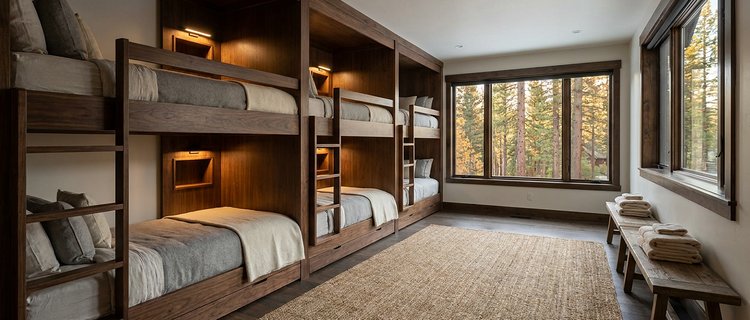
A bunk room adds legal sleepers inside the cap, which is how a lodge wins the group it was built for.
The Small-Cabin Playbook
A small cabin wins by being the best couples’ cabin in its area, not by pretending to be a family cabin. Position it for two: a quality king bed, a hot tub, a fireplace, and a walkable location. Price for midweek demand, which larger cabins ignore. Open the calendar to extended stays for remote workers and seasonal visitors. Turnovers are cheap, so a short minimum stay costs little and keeps the calendar flexible. The photography should sell a mood, not a floor plan. Done well, a one-bedroom posts the strongest revenue per bedroom on the mountain.
The Large-Lodge Playbook
A lodge wins by being easy for a group to say yes to. That means a bunk room that adds legal sleepers inside the occupancy cap. It means a second gathering space or game room, so sixteen people are not in one living room. It means a kitchen with two of everything and parking for every car the permit allows. Set three- to four-night minimums on holiday weekends so the expensive turnover is spread across more nights. House rules and occupancy enforcement matter more here than anywhere else. That is why guest vetting and a 24/7 local team are part of how we run lodges. Groups are a specialty, not a risk, when the cabin is set up for them.
Worked Example: A 2-Bedroom and a 5-Bedroom, Read Three Ways
This example is illustrative. The 5-bedroom gross is anchored to the published Soaring Pines snapshot ($70,000 in 2024). The 2-bedroom figures and all turnover costs are modeled to show how the three views interact, not a quote for any cabin.
| Illustrative reading | 2-bedroom cabin | 5-bedroom lodge |
|---|---|---|
| Annual gross revenue | $38,000 | $70,000 |
| Stays per year | 70 | 45 |
| Turnover cost per stay | $150 | $350 |
| Annual turnover cost | $10,500 | $15,750 |
| Gross per bedroom | $19,000 | $14,000 |
| Net of turnover | $27,500 | $54,250 |
| Net of turnover, per bedroom | $13,750 | $10,850 |
Illustrative example only. The lodge wins on gross and net. The small cabin wins per bedroom. Both are good rentals when run for their guest.
Read it the owner’s way. If you are choosing what to buy, per-bedroom revenue tells you what each dollar of purchase price is likely to earn. If you already own the cabin, net of turnover tells you what reaches your account. A free rental projection gives you all three views for your specific address.
Size Is a Strategy, Not a Verdict
The owners who struggle are not the ones with small cabins or big ones. They are the ones marketing a condo to families or a lodge to couples. Match the cabin to its guest, respect the occupancy cap, and read the revenue three ways. Then cabin size in Big Bear becomes a strategy you control rather than a limit you inherited. Our revenue manager builds that strategy cabin by cabin, from the one-bedroom in the Village to the lodge in Moonridge that sleeps 16. If you want to know where yours fits, call our local team at (909) 866-8200. Whatever size you own, it matters to us.
Frequently Asked Questions
FAQ
Can a one-bedroom make money in Big Bear?
Yes. A one-bedroom positioned for couples, with a hot tub and a walkable location, often posts the strongest revenue per bedroom in the market. Turnovers are cheap and fast. Midweek and extended-stay demand fills gaps that larger cabins ignore. The purchase price is lower, too. It will not match a lodge on gross revenue, and it does not need to.
FAQ
Is a bigger cabin always more profitable?
No. Bigger cabins earn more gross because groups pay more per night. They also carry higher turnover costs, more wear, and a harder occupancy ceiling in the County. Read per bedroom and net of turnover, and a well-run small cabin can close much of the gap. The most profitable cabin is the one matched to its guest and priced by someone who knows Big Bear demand.
FAQ
How does the occupancy cap affect a large cabin?
It sets the ceiling on group size and therefore on rate. In the City of Big Bear Lake, a large lodge can sleep up to 16 if square footage and parking allow. In unincorporated County areas, the hard cap is 12 regardless of bedrooms. A 6-bedroom lodge in Sugarloaf is marketed to a smaller group than the same lodge in Moonridge. Confirm your jurisdiction before you count beds.
FAQ
Do large groups cause more wear?
More people means more wear per stay, but lodges have fewer stays, so annual wear is closer than owners expect. The real variable is guest fit and enforcement. Clear house rules, guest vetting at booking, posted occupancy limits, and a 24/7 local team that responds in person keep group stays within bounds. Durable furnishings and a bunk room built for it absorb the rest.
FAQ
What size do most guests search for?
Demand in Big Bear spans every size. Family-size cabins, two to four bedrooms, draw the broadest pool of searches because they fit the most trip types. Lodges see fewer searches but longer, higher-value bookings from groups. Studios and one-bedrooms see steady couples and midweek demand. Our revenue manager prices each tier against the guests actually searching for it, not against an average.
FAQ
Does Big Bear Vacations manage condos?
Yes. Big Bear Vacations manages homes from one-bedroom condos to lodges that sleep 16. Each home is reviewed on location, condition, guest appeal, amenities, owner goals, and fit with the program. A condo in the Village with a hot tub is a strong couples’ rental. The team positions and prices it that way rather than treating it as a small family cabin.
Whatever Size You Own, Get the Number for Your Cabin
Request a free rental projection and see your cabin’s revenue read three ways: gross, per bedroom, and net to you. Built by the local team that manages every size in Big Bear.
Get Your Free Rental Projectionor call our local team at (909) 866-8200