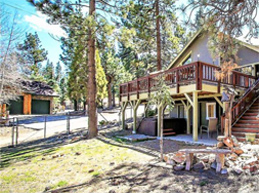
Buying a Big Bear Cabin to Rent? The Pre-Offer Checklist Our Managers Use
The short answer: If you are buying a Big Bear cabin to rent, underwrite it like a manager before you write the offer. Run ten checks, in this order: jurisdiction and permit path, occupancy cap, off-street parking, road access and snow exposure, hot tub feasibility, layout for groups, systems age, HOA rules, insurance in a wildfire zone, and comparable managed revenue. The first two decide the business model. The permit ceiling sets how many guests the cabin can legally sleep before price enters the picture. Big Bear Vacations will run a free rental projection on any listing you are considering. You close on a cabin that already has a number, a plan, and a team.
On This Page
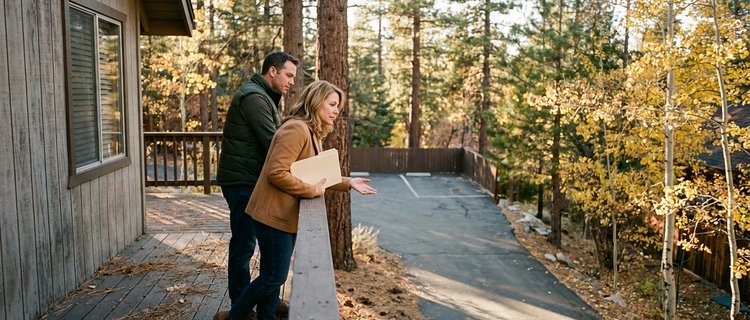
The tour is where the projection starts. Count parking, read the driveway, and find the hot tub circuit before you fall for the view.
Big Bear is one of Southern California’s strongest two-season, drive-to rental markets. Ski weekends fill the winter and the lake fills the summer. The whole market sits two hours from Los Angeles, Orange County, San Diego, and the Inland Empire. Buyers who do well here treat the tour like due diligence. We have managed Big Bear cabins since 1995. The checklist below is the one our team runs when a buyer or an agent sends us a listing.
Why Underwrite Before You Offer When Buying a Big Bear Cabin to Rent
Price does not set a cabin’s rental ceiling. Jurisdiction does. A cabin inside the City of Big Bear Lake can sleep up to 16 under the City formula. A cabin in Big Bear City, Sugarloaf, or Fawnskin sits under San Bernardino County rules with a hard cap of 12, whatever the bedroom count. Parking can lower either number. Neither permit transfers at sale, so the clock on your first bookable night starts at closing. Those facts shape the projection more than the listing price does. Check them first, then negotiate.
The Ten Checks, One by One
1. Jurisdiction and permit availability
On the tour, find out which side of the city line the cabin is on. A Big Bear Lake address covers both. Ask the listing agent for the seller’s permit history and any violation record. In the City, the license expires on sale and the new owner applies after escrow, with processing of up to four weeks. In the County, the new owner applies within 30 days. The cabin may keep operating while that application is pending if the prior owner held a permit and there are no open violations. This check sets the occupancy ceiling, the parcel rule, and your start date. The City vacation rental program FAQ and the County short-term rental program site publish the full rule sets.
2. Occupancy cap by bedroom and septic
Both jurisdictions start at two per bedroom plus two. The City counts adults, with a total cap of 16 or one person per 200 square feet. The County short-term rental program caps overnight occupancy at 12 and counts bedrooms from Assessor and building records. A loft or converted garage may not count. Many County cabins are on septic, and a septic system is sized to a bedroom count. Ask for the recorded bedroom count, the septic capacity, and the last pump date. Sleeping capacity is the biggest driver of nightly rate, so this check moves the projection directly.
3. Off-street parking count
The City requires one paved off-street space per bedroom. The County requires every occupant and guest vehicle to park on the property. Both ban street parking when snow conditions exist, from October 15 to April 15. On the tour, count spaces that still work with two feet of snow and a plow berm. Ask whether the garage is usable and whether the driveway is paved. Short parking caps occupancy in both jurisdictions. That lowers the guests you can host and the rate tier the cabin sits in.
4. Road access and snow exposure
Look at the driveway grade, which way it faces, and who plows the road. A steep, north-facing driveway on a private road is the hardest winter cabin to operate, and winter is the season that pays. Guests arrive under Caltrans chain controls that can require chains on every vehicle at R-3. A cabin that is easy to reach once they are up the hill books and reviews better. Access moves winter occupancy and cancellations.
5. Hot tub feasibility
If the cabin has no spa, check for a 220-volt circuit, a level pad or a deck built for the weight, and room to meet setbacks. If it has one, ask its age and whether it was permitted. Both jurisdictions prohibit spa use during 10 p.m. to 7 a.m. quiet hours, so placement near a neighbor’s bedroom matters. A hot tub is one of the most searched amenity filters in a mountain market. Spa service is part of the Big Bear Vacations property care program. It moves rate and conversion.
6. Layout for groups
Count real bedrooms, then look for the second gathering space: a game room, loft, or finished garage where the kids go after dinner. A bunk room adds sleepers without adding a bedroom, as long as the total stays inside the cap. Group layouts are where Big Bear’s top earners live. Our published 2024 snapshots: a six-bedroom that sleeps 16 earned $90,000, a five-bedroom that sleeps 16 earned $70,000, and a four-bedroom lakefront that sleeps 12 earned $75,000. Layout moves the guest type, the minimum stay, and the rate.
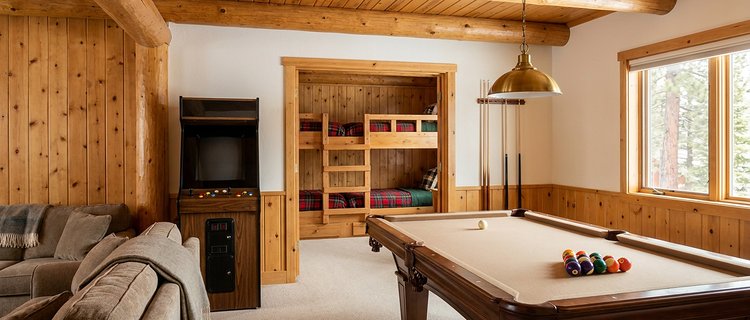
A second gathering space and a bunk room are what turn a four-bedroom into a group cabin.
7. Systems age: roof, furnace, propane, septic, water heater
Mountain cabins wear hard. Ask the age of the roof, furnace, and water heater, whether heat is propane or natural gas, and when the septic was last inspected. Request service records. None of this changes the gross projection, but it changes what you keep. A furnace that fails in January is both a repair bill and a lost weekend. The pre-offer job is to know what you are inheriting. Systems age moves net revenue and your reserve, not the rate.
8. HOA and CC&Rs
Some Big Bear subdivisions and lakefront associations restrict or prohibit short-term rentals. A City or County permit does not override private covenants. Ask for the CC&Rs and any rental rules before you write the offer, not during escrow. Look for minimum-stay requirements, guest limits, and parking rules on top of the public ones. This check is binary. A cabin you cannot legally rent has no projection, so clear it early and in writing.
9. Insurance quote in a wildfire zone
Get a real quote before you remove contingencies. Big Bear sits in forest, and some cabins can only be insured through the California FAIR Plan, the state’s insurer of last resort. The FAIR Plan dwelling policy is named-peril, covering fire, lightning, and smoke. That is why the FAIR Plan itself recommends a separate Difference in Conditions policy for the gaps. Confirm the policy allows short-term rental use. Insurance moves your carrying cost and can decide whether a lender will fund the deal.
10. Comparable managed revenue
Skip the online calculator and ask for a projection built from managed comparables. Big Bear Vacations runs a free projection on any listing a buyer is considering. The team reviews the home against Big Bear rental demand, occupancy, ADR potential, amenities, bedroom count, location, seasonality, and comparable performance. This is the number the other nine checks feed. Carry it into your offer. It tells you what the cabin can support, not what the seller hopes it can.
The Pre-Offer Checklist Table for Buying a Big Bear Cabin to Rent
| Check | Where to find the answer | Pass unless you see this flag |
|---|---|---|
| 1. Jurisdiction and permit | County Assessor lookup; seller’s permit history | Flag: open violations or an unclear boundary |
| 2. Occupancy cap | Recorded bedroom count; septic capacity | Flag: rooms that do not count toward the cap |
| 3. Parking | Count on site; paved vs. gravel | Flag: fewer spaces than bedrooms, or street-only |
| 4. Access and snow | Driveway grade, exposure, who plows | Flag: steep, shaded, or private road |
| 5. Hot tub | 220V circuit, pad or deck, setbacks | Flag: no power or no placement |
| 6. Group layout | Bedrooms plus second gathering space | Flag: one living space only |
| 7. Systems age | Service records, inspection | Flag: unknown roof or furnace age |
| 8. HOA and CC&Rs | Association documents before offer | Flag: restrictions, or silence on rentals |
| 9. Insurance | Broker quote before contingencies | Flag: FAIR Plan only, with no DIC policy |
| 10. Managed revenue | Free projection on the listing | Flag: a seller’s number with no comps |
What a Projection on a Listing Looks Like
Send the listing. The team reviews the home and comes back with a custom rental projection, a review of its rental potential, a management program overview, and next-step recommendations. There is no obligation. It is built by people who price Big Bear cabins every day, from managed comparables rather than a scraped average. The team weighs location, legal sleeping capacity, amenities, condition, and seasonality against managed comps, and the rental projection page lists exactly what you receive. For the net side, read why occupancy is not the best KPI for a cabin.
How We Work With Buyers and Their Agents
Agents can request projections on demand for active listings or buyer prospects through the Big Bear Vacations agent referral program. Referred homes that join the program earn the agent a referral commission of up to $1,500, plus buyer leads for as long as the home stays in it. For buyers, the projection answers the question every agent hears on the drive up: what could this cabin earn? Our Big Bear real estate services connect buying and renting. Our guest-side pages for Moonridge, lakefront cabins, and Sugarloaf show how each area is marketed to the guests who book there.
Close on a Cabin With a Plan
The best cabin purchases we see are not the ones with the best view. They are the ones where the buyer knew the permit ceiling, the parking count, and the managed number before the offer went in. Onboarding started the week escrow closed. That is what buying a Big Bear cabin to rent looks like when it goes well. Once you own it, our rent-ready checklist takes over, from permits to photography. Touring a cabin this weekend? Send us the listing and we will send back a projection before you write the offer. Agents can request one through the agent program. Anyone can call our local team at (909) 866-8200. We have been reading Big Bear listings since 1995, and we are happy to read yours.
Frequently Asked Questions
FAQ
Can I get a projection before I close?
Yes. Big Bear Vacations runs a free rental projection on any listing a buyer is considering. Agents can request one for active listings through the agent referral program. Send the listing link and the team reviews the home against managed comparables. No obligation, and most useful before you write the offer.
FAQ
Do permits transfer with the sale?
No, in either jurisdiction. A City of Big Bear Lake license expires on sale. The buyer applies after escrow closes, with processing of up to four weeks. A San Bernardino County permit is voided by the change of ownership, and the buyer applies within 30 days. Build the application into your closing timeline.
FAQ
How many parking spaces do I need?
In the City of Big Bear Lake, one paved off-street space per bedroom. In the County, enough on-site space for every occupant and guest vehicle, since street parking is prohibited. In both, parking can limit occupancy below the bedroom formula. Count spaces as they work in winter, with a berm at the street.
FAQ
Can I rent while the permit is pending?
In the City, no. Renting or advertising without a valid license starts at a $1,500 fine. In the County, a new owner may keep operating during a pending application. That requires a prior permit, no outstanding violations, and an application filed within 30 days of taking title.
FAQ
What if the cabin is in an HOA?
Read the CC&Rs and rental rules before you write the offer. Some associations prohibit short-term rentals outright. Others add minimum stays, guest limits, or parking rules on top of the City or County rules. A public permit does not override private covenants. Get the association’s position in writing.
FAQ
How long does onboarding take after closing?
It depends on the permit and the cabin’s condition, so start the week escrow closes. The permit path is the long pole. Plan on up to four weeks in the City and a 30-day application window in the County. Furnishing, photography, listing setup, and inspections run alongside it under our rent-ready checklist. Cabins that pass the ten checks onboard fastest.
Touring a Cabin This Weekend?
Send us the listing and we will send back a free rental projection before you write the offer. It is built by the local team that has managed Big Bear cabins since 1995.
Get Your Free Rental Projectionor call our local team at (909) 866-8200